
The Early Days: Pioneering Virtual Reality Therapy
A little over thirty years ago, the world of psychology and technology merged. Virtual Reality (VR) was first used to treat phobias. Back in the 1990s, this was an experimental approach, with clunky headsets and pixelated environments. Pioneering researchers like Dr. Barbara Rothbaum at Emory University and Larry Hodges at Georgia Tech first used VR in 1995 to treat patients with fears of heights, flying, and war-zone-related PTSD.
When Virtual Reality therapy began, it was mostly limited to research labs. Early VR systems were expensive, difficult to use, and visually primitive. Yet, even these basic simulations proved effective. Patients with fear of heights, spiders, or flying could confront their fears in a safe, controlled, and repeatable environment. The immersive nature of VR allowed therapists to gradually expose patients to their triggers, a process known as exposure therapy.
https://healthymind.fr/en/history-of-therapeutic-virtual-reality/
Evolution of VR Technology
As Virtual Reality hardware improved, so did its therapeutic potential. The 2000s and 2010s saw the rise of commercially available VR headsets, such as Oculus Rift and HTC Vive, which brought higher resolution, better motion tracking, and greater realism. By the mid-2020s, VR devices became lightweight, wireless, and affordable. Artificial intelligence (AI) started powering dynamic environments that could respond to patient feedback in real time, making therapy sessions more personalized and effective.
The integration of biometric sensors—like heart rate monitors and eye tracking—allowed therapists to measure patient responses with precision, tailoring exposure levels to maximize comfort and progress. Virtual Reality therapy platforms also became accessible via smartphones and tablets, opening the door to at-home treatment and teletherapy.
Virtual Reality Therapy in 2026 and How It’s Used Today
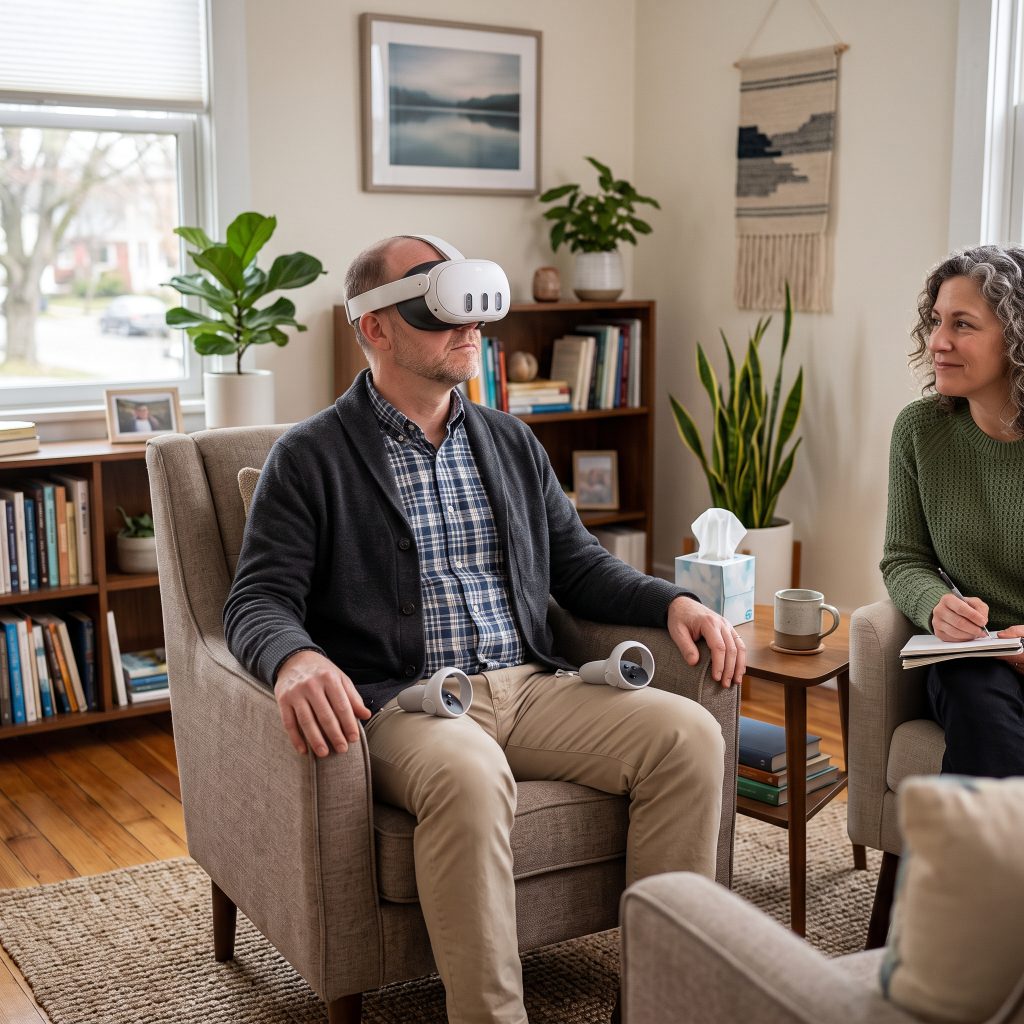
In 2026, VR therapy is mainstream. Clinics, hospitals, and private practices use VR for a wide range of phobias: fear of animals, heights, social situations, driving, and more. Therapy sessions are often hybrid, combining in-person guidance with immersive VR experiences.
Here are some of the benefits of Virtual Reality today:
- Exposure Therapy Made Safer and More Accessible
One of the most established uses of VR in mental health is exposure therapy for anxiety disorders, phobias, and post-traumatic stress disorder (PTSD). Virtual Reality allows therapists to gradually expose patients to feared situations or memories in a controlled, safe, and customizable environment. For instance, someone with a fear of heights can be virtually placed atop a skyscraper, or a person with PTSD can revisit traumatic scenarios with support. This flexibility improves engagement and allows for repeated, cost-effective sessions without leaving the clinic. - Enhanced Mindfulness and Relaxation
VR environments can transport users to calming, immersive spaces—such as a serene beach or tranquil forest—where they can practice mindfulness, meditation, or guided relaxation. Studies show that these virtual experiences can help reduce stress, anxiety, and symptoms of depression by making relaxation practices more engaging and accessible, especially for those who struggle with traditional methods. - Improved Social Skills and Confidence
For individuals with autism spectrum disorder, social anxiety, or other conditions that affect interpersonal interactions, VR can simulate social situations. Users can practice conversations, job interviews, or group settings in a low-risk environment. These simulations help build confidence and improve social skills, offering valuable experience before real-world interactions. - Pain Management and Distraction
VR is increasingly used in hospitals and clinics to help patients manage acute and chronic pain. Immersive environments can distract users from discomfort and provide engaging activities during painful procedures or rehabilitation. This technique has shown promise for burn patients, dental procedures, and chronic pain management, reducing reliance on medication and improving patient outcomes. - Remote Therapy and Accessibility
VR platforms allow therapists to conduct sessions remotely, broadening access to mental health care for people in rural or underserved areas. This is particularly beneficial for individuals with mobility issues or those who feel uncomfortable in traditional clinical settings. VR can also enable group therapy sessions and peer support networks, fostering connection and reducing isolation. - Personalized and Data-Driven Treatment
VR therapy can be tailored to the individual’s needs, tracking progress and responses in real-time. Therapists can adjust scenarios, difficulty levels, and session intensity based on data collected during each session. This personalized approach enhances treatment effectiveness and helps clinicians better understand their patients.
The Future and Beyond Phobia Treatment
While Virtual Reality started with phobia treatment, its scope now includes PTSD, anxiety disorders, pain management, and even neurorehabilitation. As VR continues to evolve, we can expect even more lifelike environments, deeper integration with AI, and widespread accessibility. Over the past three decades, VR has transformed from a novel experiment to a trusted tool in the fight against phobias. In 2026, its impact on mental health is undeniable—helping people confront their fears, reclaim their lives, and discover new possibilities for healing. As technology advances, so too will the ways we harness VR for mental wellness, making the future even more exciting.
Remember, If things ever feel overwhelming, reaching out to a therapist can be a really helpful step.