

Before getting into attachment styles, it is good to go over a bit of it’s history and the attachment theory. Attachment theory is based on the joint work of J. Bowlby and M. S. Ainsworth. Here is an article that summarizes Bowlby’s and Ainsworth’s separate and joint contributions to attachment theory
The History of Attachment Theory
Attachment theory explains why infants become very distressed when separated from their parents. John Bowlby noticed that infants react with actions like crying and searching, not just to express pain but to try to reunite with their parents. Unlike earlier psychoanalytic ideas that saw these behaviors as immature, Bowlby believed they served an evolutionary purpose.
He argued that these behaviors help infants stay close to caregivers who provide protection and care, increasing their chances of survival. The attachment system, shaped by evolution, motivates children to maintain proximity to their caregivers.
Bowlby described this system as asking: “Is my caregiver close, available, and attentive?” If the answer is yes, the child feels safe and confident and is likely to explore and interact with others. If the answer is no, the child becomes anxious and exhibits behaviors (like searching or crying) to regain closeness. If separation continues, the child may eventually feel despair and depression.
In summary, attachment behaviors help ensure children stay connected to caregivers, which is crucial for their survival and emotional well-being.
Bowlby believed that attachment is important throughout life, not just in childhood. In the mid-1980s, researchers Hazan and Shaver began studying attachment in adult romantic relationships. They found that the emotional bond between romantic partners is similar to the bond between infants and caregivers, because both are influenced by the same attachment system. Both types of relationships share features like feeling safe together, close contact, insecurity when separated, sharing experiences, mutual fascination, and “baby talk.” Hazan and Shaver concluded that romantic relationships are a form of attachment, and romantic love is linked to the same system that drives caregiving and sexuality.
For more information and further reading here is a A Brief Overview of Adult Attachment Theory and Research
The 4 Attachment Styles
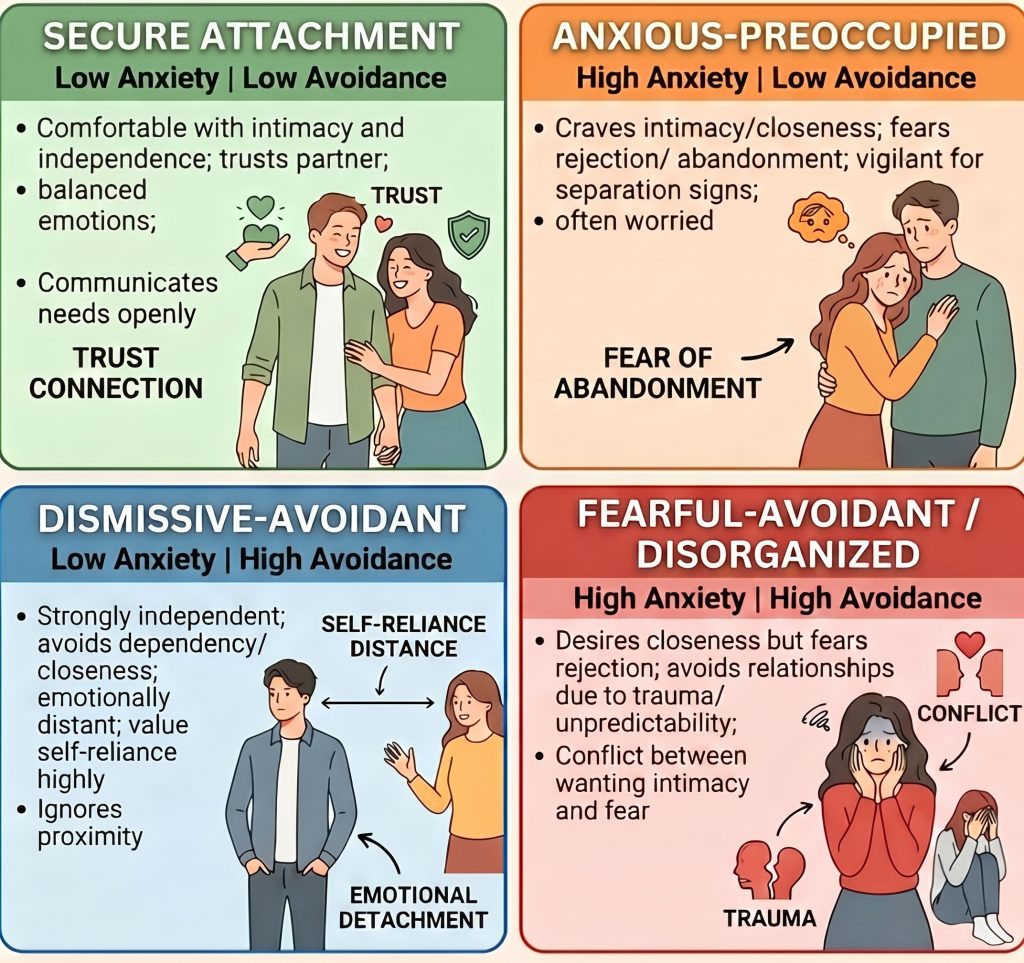
Attachment styles are patterns formed in childhood based on how caregivers responded to our needs. These styles affect how we handle intimacy, trust, and conflict in adult relationships. Knowing your attachment style can help you build healthier connections.
There are four main attachment styles:
- Secure: Comfortable with closeness and independence. Communicate well, trust partners, and handle conflict constructively.
- Anxious: Fear of abandonment and need for constant reassurance. May be sensitive to partner’s moods and act clingy.
- Avoidant: Value independence, suppress emotions, and avoid deep vulnerability.
- Disorganized : Mix of anxious and avoidant traits; want closeness but fear betrayal, leading to confusing “push-pull” behavior.
These patterns can change with self-awareness, intentional choices, and therapy. To learn more about your style, you can use assessment tools online or read resources from the Attachment Project – Attachment Styles & Their Role in Relationships
Why Does It Matter?
Understanding your attachment style can help explain patterns in your relationships—why you react a certain way, why you feel drawn to particular people, or why conflicts repeat. This insight can be the first step toward healthier, more fulfilling connections.
How Can Therapy Help?
A licensed therapist is trained to help you explore your early experiences, current relationships, and emotional responses. Through conversation, questionnaires, and reflective exercises, therapy can help you:
Identify Your Attachment Style: With professional guidance, you can gain clarity about your patterns and how they affect your life.
Address Challenges: Therapy provides tools to manage anxiety, improve communication, and build trust.
Heal Past Wounds: If your attachment style is rooted in unresolved trauma or difficult childhood experiences, therapy offers a safe space to process and heal.
Develop Secure Relationships: Over time, therapy can help you move toward a more secure attachment style, fostering healthier connections with others.
When to Seek Help
If you experience recurring issues in relationships, feel stuck in unhealthy patterns, or simply want to understand yourself better, reaching out to a therapist may be beneficial. Professional support can empower you to break cycles, build confidence, and create lasting change.
Attachment styles are not destiny—they are starting points for self-discovery and growth. If you’re uncertain about your attachment style, or if you need help navigating relationship challenges, therapy can provide clarity and support. Taking this step is an act of courage and self-care, opening the door to healthier, more fulfilling relationships.