

Parenting is a beautiful journey filled with joy, challenges, and countless lessons. When your parents are involved in your children’s lives, it can add layers of complexity but also wonderful opportunities for connection. Navigating the relationship between your parents and your kids requires mindfulness, clear boundaries, and open communication. Here’s a guide to help you foster healthy, respectful relationships that benefit everyone involved.
Define Boundaries from the Start
It’s essential to establish boundaries early on. Clarify what roles your parents will play, what decisions are the ones that parents will be making and what areas might be open to the grandparents’ input. This could include discipline, education choices, or daily routines. Communicating these boundaries calmly and respectfully helps prevent misunderstandings and resentment. While grandparents often have a natural desire to spoil or indulge grandchildren, it’s important to maintain your authority as a parent. Encourage your parents to support your parenting style and decisions, even if they differ from their own views. Remember, consistency provides your children with stability and clarity.
Communicate Openly and Respectfully
Open dialogue is the foundation of healthy relationships. Share your feelings and expectations with your parents and encourage them to do the same. Listen actively to their perspectives while also expressing your concerns. Remember, mutual respect and understanding create a safe space for everyone. Here are some Active Listening Techniques:
- Give full attention (put away distractions)
- Paraphrase what you’ve heard (“So you’re saying…?”)
- Validate—even when you disagree (“That makes sense, given your experience…”)
- Ask open-ended questions (“What do you most enjoy about time with the kids?”)
- Use nonverbal cues: eye contact, nodding, warm tone.
Manage Expectations
No relationship is perfect, and disagreements are natural. Manage your expectations by recognizing that your parents may have different beliefs or parenting styles. Focus on what’s most important, your child’s well-being and approach conflicts with patience and empathy.
Foster Positive Interactions
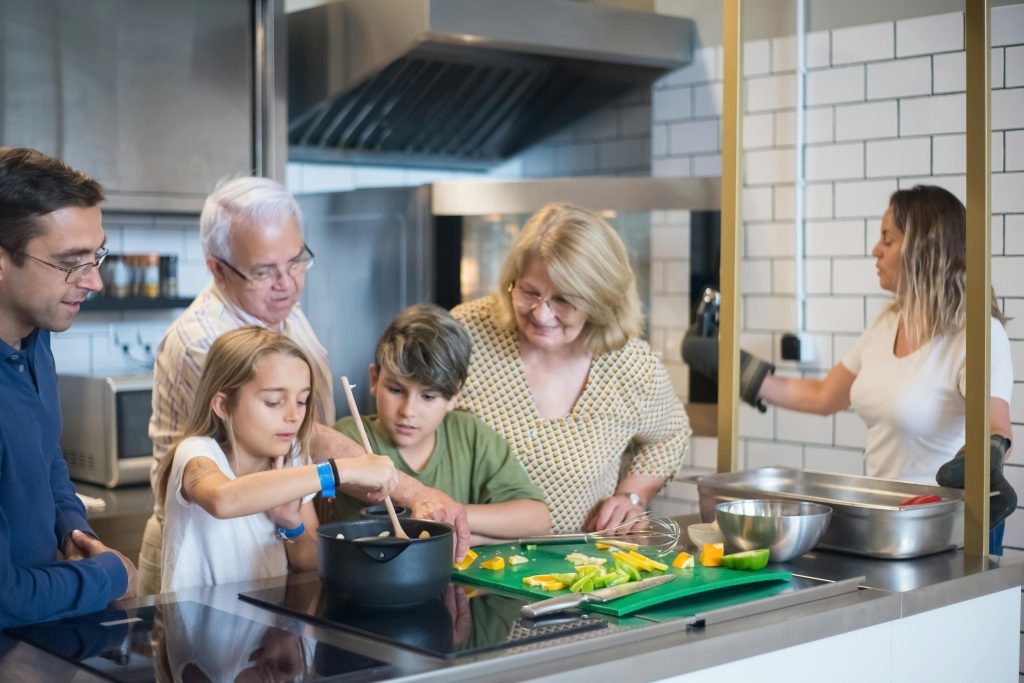
Encourage your parents to build a meaningful relationship with your children through shared activities, storytelling, or simply spending quality time together. Positive interactions strengthen bonds and create cherished memories.
Address Conflicts Calmly
When conflicts arise, address them promptly and calmly. Avoid blame or criticism and instead focus on expressing your feelings and seeking solutions. If needed, take a break and revisit the conversation later when emotions are calmer.
Prioritize Your Well-Being
Balancing family dynamics can be stressful. Remember to take care of your mental and emotional health. Seek support from friends, counseling, or support groups if needed. A healthy parent is better equipped to foster positive relationships within the family.
Be Flexible and Adapt
As children grow, their needs and relationships evolve. Stay flexible and open to adjusting boundaries and expectations. What works today might need refinement tomorrow.
Navigating the relationship between your parents and your children is an ongoing process that requires patience, communication, and respect. By setting clear boundaries, fostering open dialogue, and prioritizing your family’s well-being, you can create a harmonious environment where everyone feels valued and loved.
Remember, you’re not alone in this journey. Seeking support from a therapist can provide personalized guidance tailored to your family’s unique dynamics. Building healthy relationships takes effort, but the rewards, strong bonds, mutual respect, and joyful memories are well worth it.