
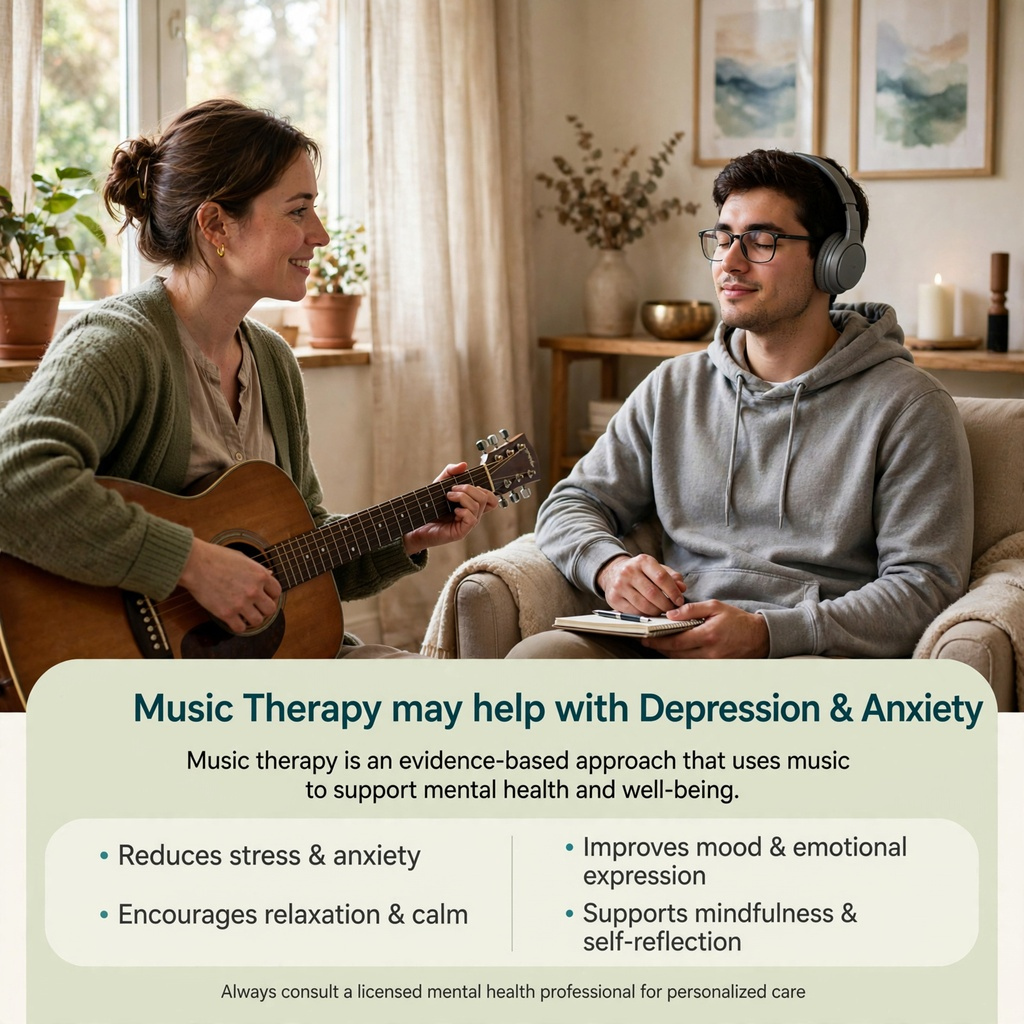
According to evidence based research and several associations music therapy may help with depression and anxiety. It can help by using music to support emotional expression, coping and connection. It’s typically guided by a trained music therapist and may involve listening, singing, playing instruments, songwriting, or gentle movement—no musical skill is needed.
Reduces Stress and Anxiety
Music therapy can help with stress and anxiety by using music to support relaxation, emotional expression, and coping skills.
Calms the body: Slow, predictable music may help ease muscle tension and slow breathing and heart rate.
Shifts attention: Listening, singing, or playing an instrument can interrupt anxious thoughts and bring attention to the present.
Helps express feelings: Music can make emotions easier to explore when words are difficult.
Builds coping skills: A therapist may pair music with breathing, grounding, or guided imagery that you can practise outside sessions.
Supports connection: Making music with someone else can reduce feelings of isolation.
Encourages relaxation and calm
Music therapy encourages relaxation by using sound, rhythm, and a supportive relationship with a trained therapist to help regulate emotions and physical tension. It can help through:
Slower breathing: Gentle rhythms can guide breathing toward a comfortable, slower pace.
Reduced tension: Music paired with breathing exercises or muscle relaxation can help the body settle.
A shift in attention: Focusing on music can interrupt worry and redirect attention away from stressful thoughts or discomfort.
Comfort and connection: Familiar or personally meaningful music can create a sense of safety and support.
Improves Mood
Music can improve mood by engaging the brain’s emotion, reward, and stress-response systems. With a trained music therapist, activities such as listening, singing, playing instruments, or writing songs can help you:
Reduce stress: Calming music can ease physical tension and support relaxation.
Feel pleasure and motivation: Enjoyable music activates reward pathways.
Connect with others: Shared music-making can reduce loneliness and build belonging.
Supports Mindfulness and Self-Reflection
Music therapy uses music experiences—such as listening, improvising, singing, or songwriting—to support emotional well-being. It can encourage both mindfulness and self-reflection:
Anchors attention in the present: Focusing on rhythm, melody, or vibration gives your mind something to return to when it wanders.
Builds body awareness: Noticing how music affects your breathing, muscle tension, or energy helps you recognize your physical and emotional state.
Makes emotions easier to explore: Music can help you notice and express feelings that are difficult to express otherwise.
Opens up reflection: Discussing lyrics, memories, or musical choices can reveal personal needs, values, and patterns.
Encourages nonjudgmental expression: Improvising or writing a song offers a way to explore feelings.
Research suggests music therapy can reduce symptoms for some people. It’s generally an addition to—not a replacement for—psychotherapy, medication, or other recommended care. Listening to music on your own can also be helpful, though it isn’t the same as music therapy.
The Tampa Bay Institute for Music Therapy is a local resource that you can look into if you are interested. Here is some information about their founder:
Sharon Graham Barrett, M.M., MT-BC, is a board-certified music therapist and the Founder and Executive Director of TBIMT. She earned her master’s degree in music therapy from Florida State University and holds additional credentials as a NICU Music Therapist (NICU-MT) and Neurologic Music Therapist (NMT). Her background encompasses a broad range of clinical experience. Sharon oversees a clinical internship training program and regularly presents at regional and national music therapy conferences. She also serves as an invited lecturer at medical conferences and colleges.
If you are looking for more information on music therapy check out the following resources:
American Music Therapy Association
Oxford Academic Journal of Music Therapy